
GROUPS, EVENTS & WORKSHOPS
Somatically Oriented Groups, Events and Workshops


We are connection and movement first — designed to be part of something, to belong. Yet in modern life, it’s easy to lose our connection with ourselves and with others. We may avoid conflict or difficult conversations, or find our relationships staying on the surface when something deeper is longed for.
Healthy, vibrant relationships are our bedrock — our birthright. We all carry the inbuilt capacity, the raw material, to build and sustain them. Through heartful sharing, honest reflection, and guided practices for nervous system regulation and embodiment, group offerings invite a depth of growth that is only possible through the container of community.


Embody - A practice circle for women
Unlike any other, this facilitated circle invites you to dive deep. Through heartful sharing, truth-telling and guided practices for nervous system regulation and embodiment, we co-create a confidential space for learning, support and connection. We pay attention to what unfolds, giving room to explore moments of difference and connection, discomfort and closeness that naturally arise between us. Join a small group you’ll come to know, trust and grow alongside.

Workshops and Events
From time to time I offer focused gatherings around the things life calls on us to navigate — from big transitions, parenting teens, caring for elders and childhood bereavement, to building practical somatic regulation skills for the workplace. Each offering combines thoughtful exploration with embodied practice in the context of community, creating space to learn, reflect, experience something different, and leave with something useful to carry into everyday life.
Embody for Practitioners
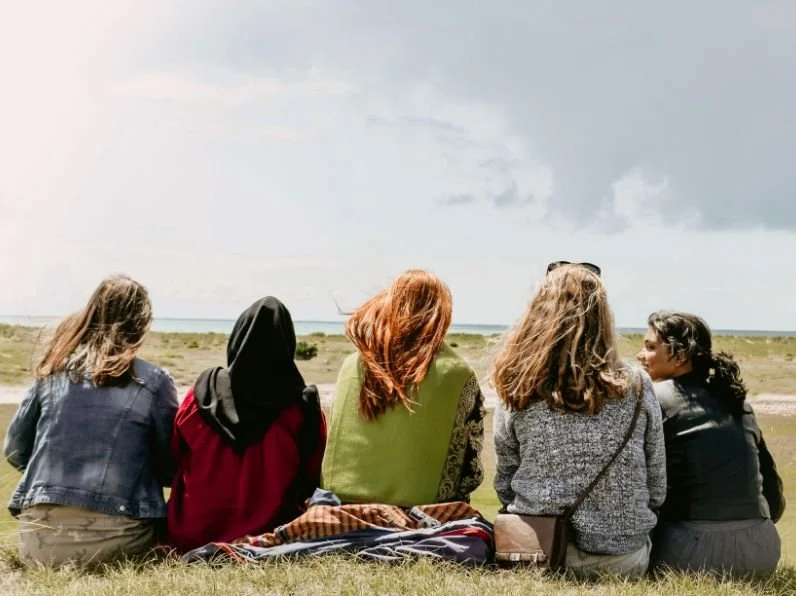
Welcome to a circle built for therapists and practitioners of all kinds. A facilitated space where you can experience the holding you offer others as something truly mutual. Through embodied practice, reflection and group process, we attend to our own nervous systems and what emerges in our relational field. A place to be known in community, and to deepen our capacity to stay present, connected and responsive in work and life.

FAQs
-
Each group, workshop or course will have its own focus such as ways of understanding ourselves, nervous system awareness and regulation, relationships, or embodied change. There will be an opportunity beforehand for you and I to check-in and ensure this is the right fit.
There may be people similar to you attending, there may also be people who are quite different in some ways to you.
-
You don’t need specific experience to participate, but reflection, growth, connection and being open-minded will need to be values that are alive and well in your life. This may mean you have explored therapy and/or somatic work and/or have an existing reflective or contemplative practice.
-
Your nervousness is very welcome, and to be expected. It’s just your system’s way of asking you to be alert in the presence of unfamiliar people. You will find that others share this worry. It will take time to build trust and connection, and we will pay specific attention to this.
Please know that you won’t be expected to perform, disclose, impress, be ‘good’, or comply. Part of the process is creating enough safety for people to participate in ways that feel manageable to them.
-
Groups, workshops and courses are not therapy, but at their best they can be therapeutic. They may include education, reflection, contribution and listening, experiential practices and group learning. They can support insight, embodiment and change, but they do not replace individual therapeutic care, especially if there is a need for focused support for trauma, crisis, or complex personal circumstances.
-
No. Sharing something personal is not mandatory. There may be invitations to reflect, speak, journal, ask questions, or share in pairs or the wider group, but these are always invitations. You can choose what you share, how much you share, or whether you share at all. (Most people find that over time they do want to participate in this way.)
-
Safety is supported through a flexible scaffold, gentle pacing, offering choice, informing and seeking consent, and respect for different levels of comfort. You will be invited to notice what feels right for you, rather than pushed to override yourself.
Group agreements usually include confidentiality, respectful listening, no fixing or advice-giving unless invited, and permission to participate at your own pace. Participants may provide feedback or input for each other at times – how, when and what to raise can become part of the group learning.
-
No. These spaces are not designed around detailed trauma disclosure for three reasons. It can overwhelm you. It can overwhelm others. It sets up the group for reenacting traumatic material.
Difficult material may sometimes arise, because we are working with real human experience. But the emphasis is on present-moment awareness, learning, support, choice and integration — not on telling painful stories or going into traumatic detail.
-
You are encouraged to slow down, pause, stop, or take a short break at any time. I will offer guidance for staying connected to choice, grounding and support, and we will be working on building these skills together.
In a group, this can include orienting to the room, noticing what feels stable, reducing intensity, observing rather than participating, or feeling the available support or connection as much as you are able.
-
Yes – they will be adapted to the group, workshop or course. These may include gentle invitation to turn towards awareness, movement, posture, breath, grounding, imagery, or noticing sensation.
Touch is never assumed. If any exercise invites any contact with another person, this will be clearly explained, optional, and consent-based. There will always be alternatives, including self-touch (such as bilateral tapping).
-
Yes. It is always okay to opt out.
You might choose to observe, journal, reflect, rest, take a brief pause, adapt a practice, or participate in a small way. The impulse to opt out is not a failure — it is one way of listening to your system and staying in choice.
-
A group, workshop or course may not be the right fit if you are currently in acute crisis, need intensive individual support, or feel unable to stay within a group learning environment without becoming overwhelmed.
If you are unsure, you are welcome to enquire. We can consider whether the offering is likely to be a safe and useful fit, or whether another kind of support may be better for now.

What others Experienced